Download IVISION Catalog

 01
Confirm available history
Check which animal records and video periods were actually retained.


Past sightings can help explain repeated access concerns. Where suitable records are retained, compare observation times, camera locations and visible movement without treating gaps in coverage as evidence that no animals were present.
Confirm detector support, camera suitability and the proposed event workflow before deployment.
Discuss animal history review
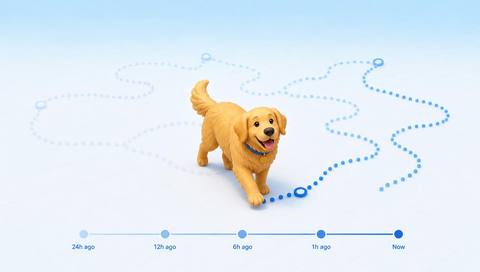
 Without IVISIONStandard CCTV feed
 With IVISIONIllustrative event overlay
The Process
Review when and where sightings recur Help teams investigate recurring visible animal access patterns.
01Check which animal records and video periods were actually retained.
 02
Compare camera locations and times using supported review tools.
 03
Review images and gaps before concluding that an access route recurs.
 04
Inspect the suspected opening and compare later observations after any change.
Explore Your Options
| Dimension |  Historical animal movement analysis |  Animal tracking |
|---|---|---|
| Observation |  Retained animal sightings, event times and supported movement records. | Successive positions of a visible animal in one camera view. |
| Event criteria | A reviewer compares available observations over a defined period. | A supported tracker associates detections across nearby frames. |
| Monitoring setup | Verify retention, clock alignment and which records are actually searchable. | Test track continuity, scene boundaries and handling of lost tracks. |
| What it cannot establish | Incomplete coverage cannot establish total animal activity, population or individual identity. | A track does not prove identity across cameras or locate an animal after it leaves view. |
| Practical outcome | Help teams investigate recurring visible animal access patterns. | Show reviewers the observed direction and last visible position of an animal. |
Illustrative demonstration
Example footage and simulated events explain the review workflow. They do not measure detector performance.
 Sites overview
No matching events.
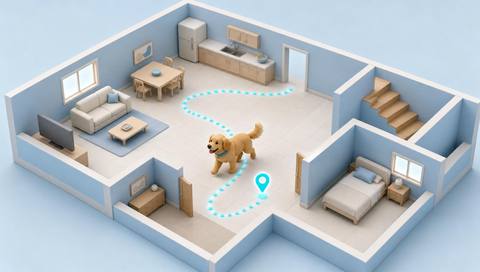 Animal Detection
Add visible within-scene route information where supported.
Read More
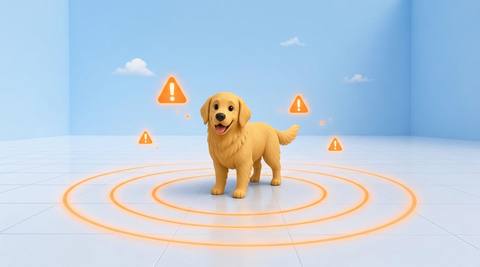 Animal Detection
Connect operational alerts with later review of retained events.
Read More Animal Detection
Investigate recurring access around locations requiring specialist checks.
Read MoreEXPLORE WHAT’S POSSIBLE
01 / 04 · HISTORICAL ANIMAL MOVEMENT ANALYSIS
Repeated sightings may relate to collection arrangements.
Example event: Several reviewed observations occur near the waste-store entrance.
Operator response: Compare times with access practices and inspect containment.
Practical value: Support a targeted operational review.
Discuss this capability02 / 04 · HISTORICAL ANIMAL MOVEMENT ANALYSIS
Animals appear near different openings over time.
Example event: Retained sightings cluster around one visible access point.
Operator response: Inspect that opening and document corrective work.
Practical value: Help prioritize physical access checks.
Discuss this capability03 / 04 · HISTORICAL ANIMAL MOVEMENT ANALYSIS
Teams need context for recurring animal reports.
Example event: Historical records show repeated visible crossings in one camera.
Operator response: Verify the pattern against coverage gaps and inspect the boundary.
Practical value: Provide evidence for an access-maintenance discussion.
Discuss this capability04 / 04 · HISTORICAL ANIMAL MOVEMENT ANALYSIS
Maintain consistent views of the access points being compared.
Visibility: Camera moves and periods without footage can distort comparisons.
Configuration: Confirm retention, time synchronization and available history-review tools.
Privacy: Apply a documented retention period and access policy.
Human review: Distinguish recorded observations from assumptions about unseen activity.
Discuss this capabilityFrequently asked questions
Review retained animal sightings or supported tracks across selected times and camera locations.
That depends on the deployed storage and retention settings; no fixed retention period is implied.
No. Coverage gaps, missed detections and unavailable footage can all leave activity unrecorded.
Sightings may repeat the same animal and do not provide a reliable population census.
Later observations can inform a review, but absence of sightings alone cannot prove that access is impossible.
Find your fit
Help teams investigate recurring visible animal access patterns. For Facilities planners, Site operations analysts.
Workflow to discuss
Historical animal movement analysis + Compare recurring sightings by observed location.
Discuss a camera view, a monitoring question and the review process your team needs.