Download IVISION Catalog

 01
Camera input
Capture a view suitable for plume context and flame detail.


Assess each supported indication separately, then review the combined context. Do not assume both smoke and flame must be visible before a finding warrants attention.
Catalog workflow. Detector availability, scene suitability and event delivery must be verified for the proposed deployment. Camera observations supplement human review and established safety procedures.
Discuss this workflow
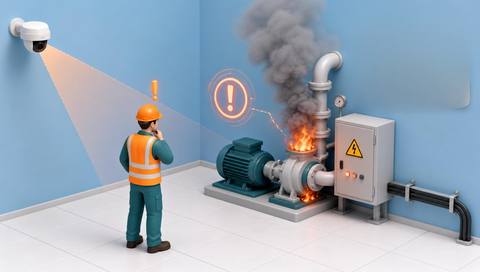
 Without IVISIONStandard CCTV feed
 With IVISIONIllustrative event overlay
The Process
Different signs can appear at different times Keep the evidence behind each indication clear.
01Capture a view suitable for plume context and flame detail.
 02
Validate the smoke and flame criteria independently.
 03
Review which cue appeared, where and in what sequence.
 04
Follow the emergency plan using all available evidence.
Explore Your Options
| Dimension |  Smoke and Fire Detection |  Fire Detection |
|---|---|---|
| Observation |  Smoke-like plume, flame-like pattern or both. | Flame-like shapes and movement in the scene. |
| Event criteria | One or more validated visual criteria are met. | A validated visual fire criterion is met. |
| Monitoring setup | Confirm independent criteria, lookalikes and response routing. | Validate scene exclusions and review thresholds. |
| What it cannot establish | Absence of one cue does not rule out fire. | Hidden combustion remains unseen; cameras do not replace certified alarms. |
| Practical outcome | Give operators complementary visual context for a possible fire-related event. | Help operators locate and verify a possible visible fire indication. |
Illustrative demonstration
Example footage and simulated events explain the review workflow. They do not measure detector performance.
 Sites overview
No matching events.
EXPLORE WHAT’S POSSIBLE
01 / 04 · SMOKE AND FIRE DETECTION
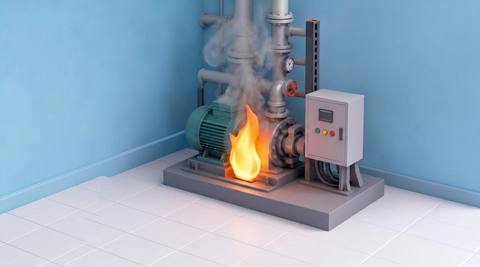
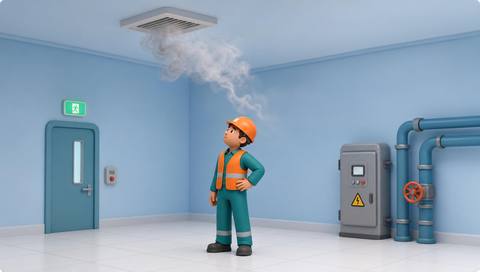
A plume may precede visible flame.
Example event: Smoke-like imagery appears first.
Operator response: Team checks the location under the response plan.
Practical value: No need to wait for a second cue.
Discuss this capability02 / 04 · SMOKE AND FIRE DETECTION
Flame may be expected while plume changes are not.
Example event: A new plume appears near permitted work.
Operator response: Supervisor verifies the changed condition.
Practical value: Precise hot-work review.
Discuss this capability03 / 04 · SMOKE AND FIRE DETECTION
Views show different incident aspects.
Example event: Separate cameras show plume and possible flame.
Operator response: Control room reconciles location and sequence.
Practical value: Better visual coordination.
Discuss this capability04 / 04 · SMOKE AND FIRE DETECTION
Assess fine detail and wider plume visibility.
Visibility: Weather and process activity affect each cue differently.
Configuration: Confirm both detectors and any event-combination behavior.
Privacy: Share incident material only with authorized personnel.
Human review: Human review and approved alarms govern response.
Discuss this capabilityFrequently asked questions
Reviews smoke-like and flame-like indications while retaining the distinction between the two cues.
No. Either indication may warrant review.
No. Each has its own lookalikes and visibility limits.
No. Cause determination requires investigation.
No. It supplements established detection and response systems.
Find your fit
Give operators complementary visual context for a possible fire-related event. For Emergency coordination teams, Site security operators.
Workflow to discuss
Smoke and Fire Detection + Preserve separate cue evidence.
Discuss a camera view, a monitoring question and the review process your team needs.