




Operational visibility
Keep scope separate from dispatch decisions.

Time-sensitive operations require clear ownership, but a camera event can still be delayed, incomplete or mistaken.
Explore use casesFind your environment
Choose an environment to see the challenges, actions,
and outcomes that matter there.
Use premises observations to support the logistics around emergency-service operations. Vehicle access, shared routes and visible equipment placement can be reviewed without inferring clinical readiness or altering dispatch decisions.
 Illustrative observation
 with IVISIONIllustrative overlay
What can Vision AI help you monitor?
Keep scope separate from dispatch decisions.

Support visible route readiness checks.

Provide context for handover tasks.
Time-sensitive operations require clear ownership, but a camera event can still be delayed, incomplete or mistaken.
Separate logistics observations from dispatch and clinical systems.
Include shift handovers and vehicle servicing.
Staff confirm the condition under the organization’s procedure.
Movement records need context.
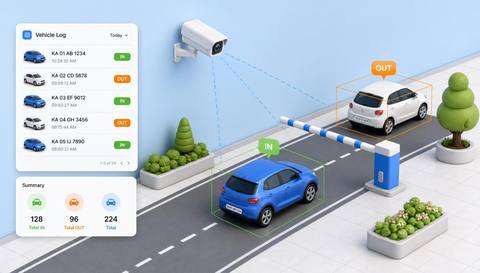
Observation: A supported vehicle observation occurs.
Response: Reconcile with the operational log.
Value: Support base-access review.
Temporary storage narrows access.
Observation: A candidate obstruction is flagged.
Response: Inspect and restore the route.
Value: Focus a readiness check.
Items await service or replenishment.
Observation: A placement exception appears.
Response: Verify status before relocating equipment.
Value: Support orderly handovers.
Camera view: Maintain safe installation around response routes.
Validation: Verify event delivery and failure behavior explicitly.
Privacy: Protect staff, patient and incident information from incidental capture.
Human review: Authorized operational staff determine readiness and response.
No. Test connectivity, processing and the recipient path.
No. Authoritative operational systems remain necessary.
No. Serviceability requires appropriate inspection and records.
No. These workflows concern premises and logistics only.
See it in action
Illustrative observationRecords supported vehicle crossings at designated entry and exit points with their available timestamps.
Scenario selector
Review supported base-access observations alongside operational records.
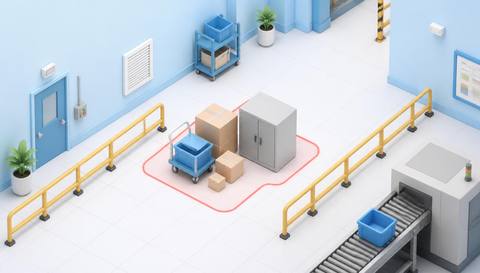
Check candidate blockage on designated response routes.
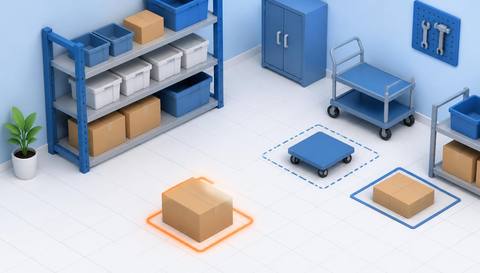
Review equipment staging against an approved arrangement.
Fit with your environment
Industrial district
No events match this filter.
Use case finder
Tell us about your environment, priority, and cameras. We’ll shape a practical starting point in three steps.
Question 1 of 3
Prefer to look around first? See every use case we offer

Discuss a camera view, a monitoring question and the review process your team needs.

 Sites overview
 3 illustrative sites