




Operational visibility
Narrow capture around sensitive work.

Sensitive samples, documents and controlled environments can be exposed unnecessarily if a camera purpose is not narrowly defined.
Explore use casesFind your environment
Choose an environment to see the challenges, actions,
and outcomes that matter there.
Limit laboratory camera observations to approved operational areas and clearly visible conditions. Protect research and patient information, and keep contamination, exposure and experimental validity decisions with qualified laboratory processes.
 Illustrative observation
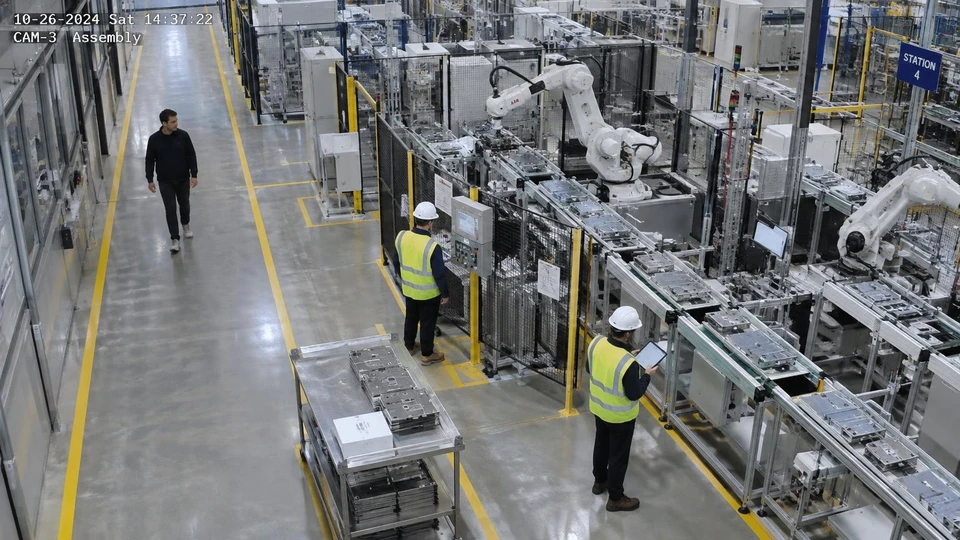
 with IVISIONIllustrative overlay
What can Vision AI help you monitor?
Narrow capture around sensitive work.

Separate visible state from laboratory performance.

Support authorized operational review.
Sensitive samples, documents and controlled environments can be exposed unnecessarily if a camera purpose is not narrowly defined.
Review scientific, privacy and safety constraints.
Ensure samples and sensitive records are not unnecessarily captured.
Qualified staff verify access and physical conditions.
Entry depends on authorization and current work.
Observation: Presence appears in the defined zone.
Response: Check the approved access process.
Value: Support contextual review.
A door remains visibly open.
Observation: A supported state observation occurs.
Response: Inspect and use dedicated environmental data where relevant.
Value: Focus a facilities check.
Items sit outside the approved arrangement.
Observation: A placement exception appears.
Response: Verify the work plan and storage requirements.
Value: Support orderly staging.
Camera view: Avoid sample identifiers, patient data and confidential experiment details.
Validation: Validate placement and door rules without disturbing laboratory controls.
Privacy: Apply strict role-based access and appropriate retention.
Human review: Qualified laboratory staff determine contamination, exposure and research implications.
Not reliably; approved testing and environmental controls are required.
No. Pressure, sealing and other controls require dedicated evidence.
No. Scientific validity depends on the appropriate methods and records.
Avoid unnecessary capture of sensitive identifiers and follow laboratory governance.
See it in action
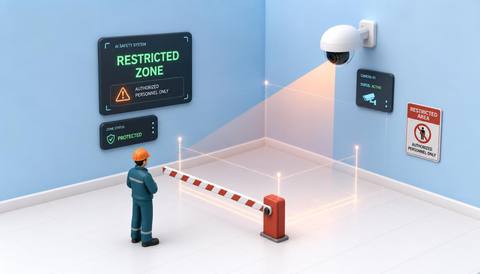
Illustrative observationObserve supported activity inside a camera-defined restricted area.
Scenario selector
Review presence at an approved laboratory access boundary.

Observe visible service-door position without inferring containment performance.
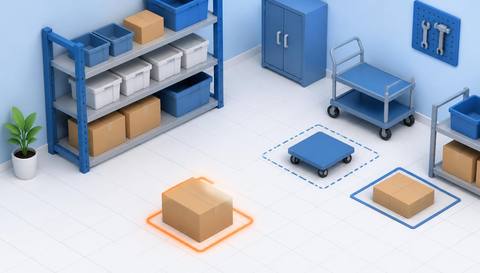
Check equipment placement in an agreed non-sensitive staging area.
Fit with your environment
Industrial district
No events match this filter.
Use case finder
Tell us about your environment, priority, and cameras. We’ll shape a practical starting point in three steps.
Question 1 of 3
Prefer to look around first? See every use case we offer

Discuss a camera view, a monitoring question and the review process your team needs.
 Sites overview
 3 illustrative sites