




Operational visibility
Focus on appropriate public-area tasks.

Arrival surges, luggage and changing platform arrangements can make a local image an incomplete account of station conditions.
Explore use casesFind your environment
Choose an environment to see the challenges, actions,
and outcomes that matter there.
Use appropriate station observations to support public-area flow and facilities checks. Keep camera analytics separate from rail signaling, track access authority and safety-critical train operations.
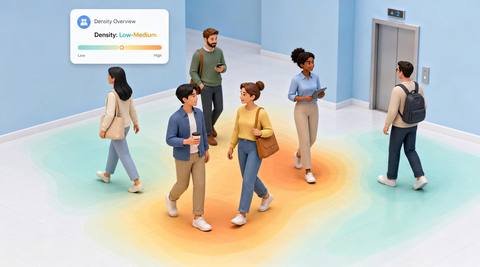 Illustrative observation
 with IVISIONIllustrative overlay
What can Vision AI help you monitor?
Focus on appropriate public-area tasks.

Account for arrival-driven peaks.

Preserve rail operational boundaries.
Arrival surges, luggage and changing platform arrangements can make a local image an incomplete account of station conditions.
Assign station operations responsibility.
Test dense groups and luggage occlusion.
Use trained review and physical checks.
Arrivals concentrate passenger activity.
Observation: A supported aggregate observation changes.
Response: Check the actual flow under station procedures.
Value: Provide situational context.
An item remains beside seating.
Observation: A candidate unattended object appears.
Response: Use the station object procedure.
Value: Focus trained review.
Temporary fixtures narrow access.
Observation: A possible obstruction is observed.
Response: Inspect physical clearance.
Value: Support facilities follow-up.
Camera view: Avoid implying coverage of unseen platform or track conditions.
Validation: Validate public-area metrics at representative peaks.
Privacy: Use proportionate passenger monitoring and restricted footage access.
Human review: Station staff determine crowd and security responses.
No. Track authority requires established rail procedures.
No. No safety-critical rail integration is established.
No. Use approved capacity and crowd-management controls.
No. Trained assessment remains necessary.
See it in action
Illustrative observationShows estimated concentrations of people across a defined visible area.
Scenario selector
Review supported aggregate activity in selected public areas.

Locate items needing the station’s trained assessment.
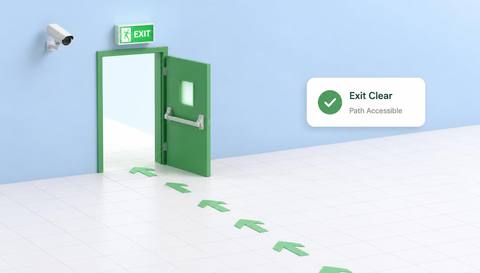
Review visible access concerns near designated exits.
Fit with your environment
Industrial district
No events match this filter.
Use case finder
Tell us about your environment, priority, and cameras. We’ll shape a practical starting point in three steps.
Question 1 of 3
Prefer to look around first? See every use case we offer

Discuss a camera view, a monitoring question and the review process your team needs.
 Sites overview
 3 illustrative sites